Payaza Checkout Terminals

The Bindings Underneath a Payment Terminal
A POS terminal looks like one object. It’s actually three systems agreeing.
There’s the hardware in a warehouse. There’s the digital identity that vendor systems and payment rails recognise. And there’s the financial rail that inflows land in and settle from. For a terminal to work, all three have to be bound to the same merchant, in the same configuration, at the same moment. Break any binding and the terminal is dead, mis-attributed, or leaking money.
Payaza POS is the product that makes those bindings happen at scale. A merchant surface for requesting and configuring terminals in bulk. An admin surface for provisioning inventory and managing the lifecycle. Both operate on the same object model.
A POS terminal looks like one object. It’s actually three systems agreeing.
There’s the hardware in a warehouse. There’s the digital identity that vendor systems and payment rails recognise. And there’s the financial rail that inflows land in and settle from. For a terminal to work, all three have to be bound to the same merchant, in the same configuration, at the same moment. Break any binding and the terminal is dead, mis-attributed, or leaking money.
Payaza POS is the product that makes those bindings happen at scale. A merchant surface for requesting and configuring terminals in bulk. An admin surface for provisioning inventory and managing the lifecycle. Both operate on the same object model.
The Two Surfaces
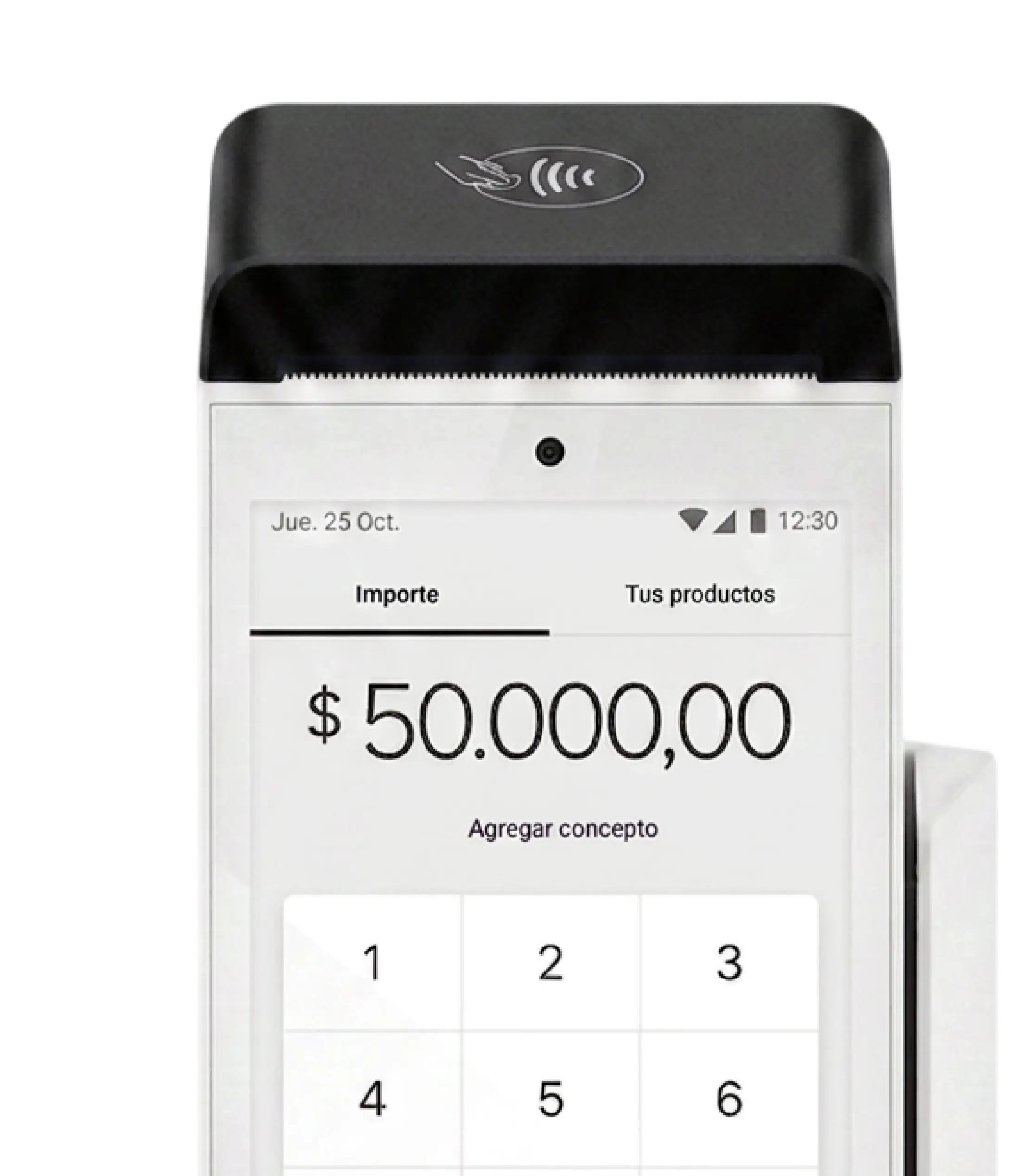
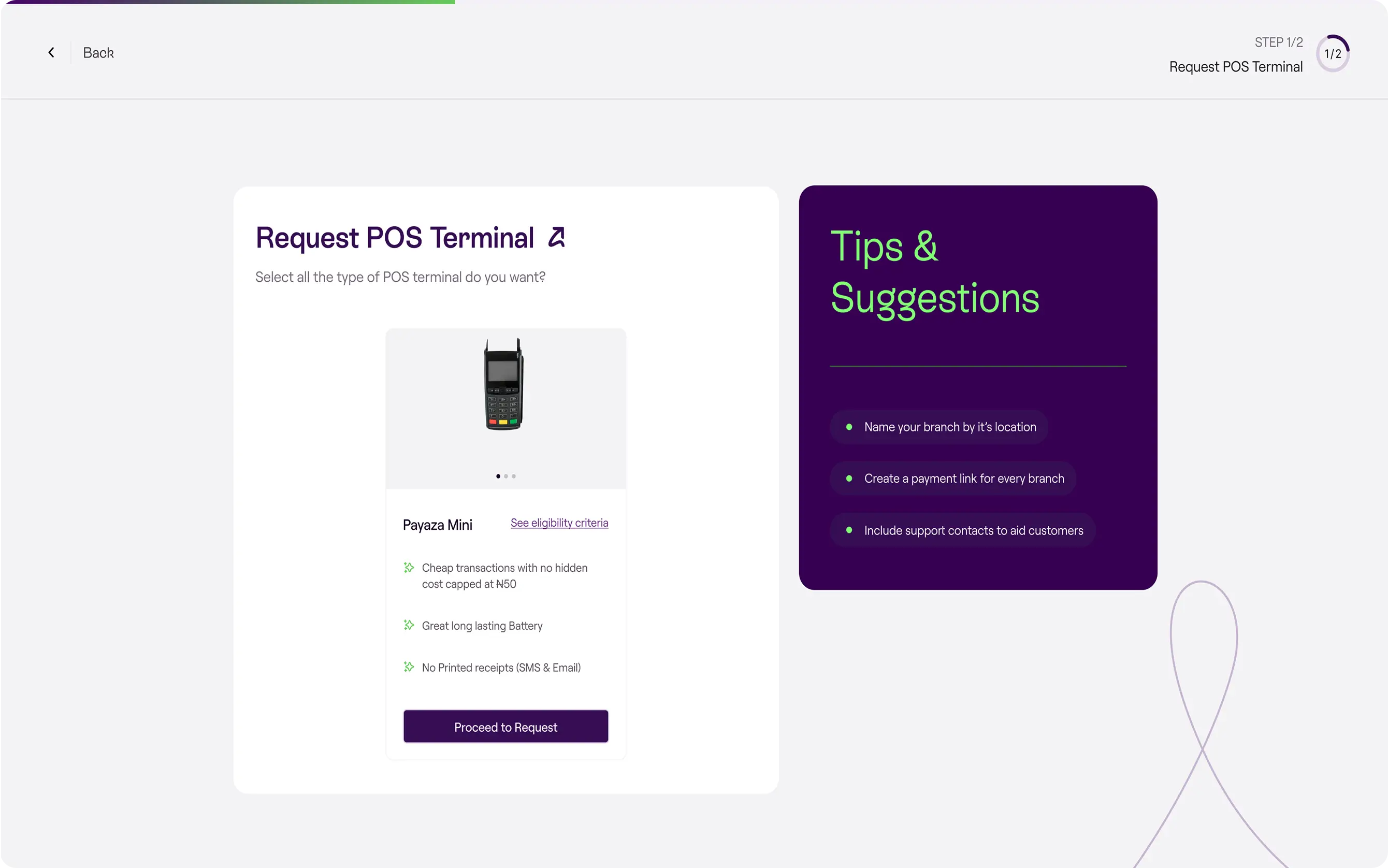
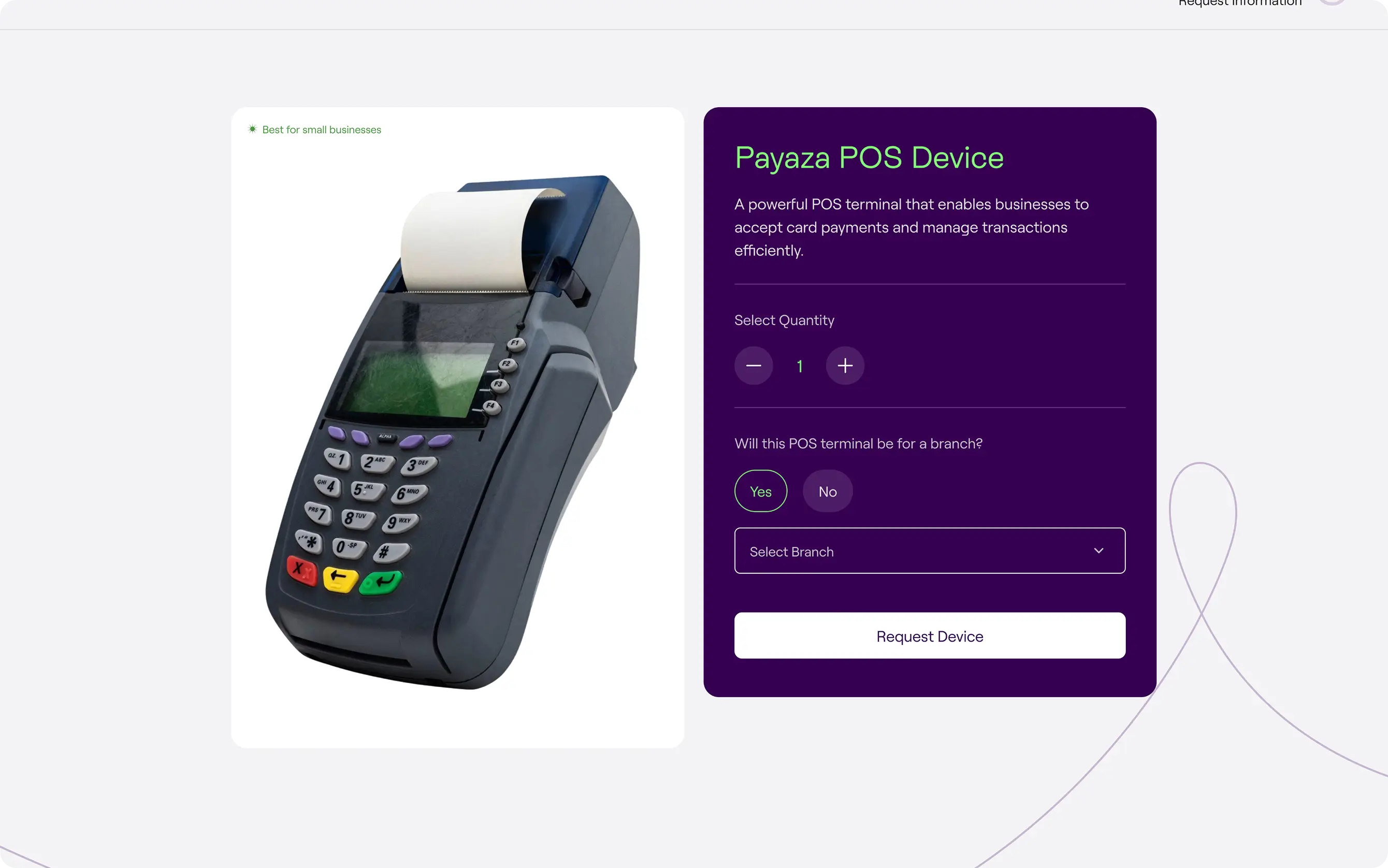
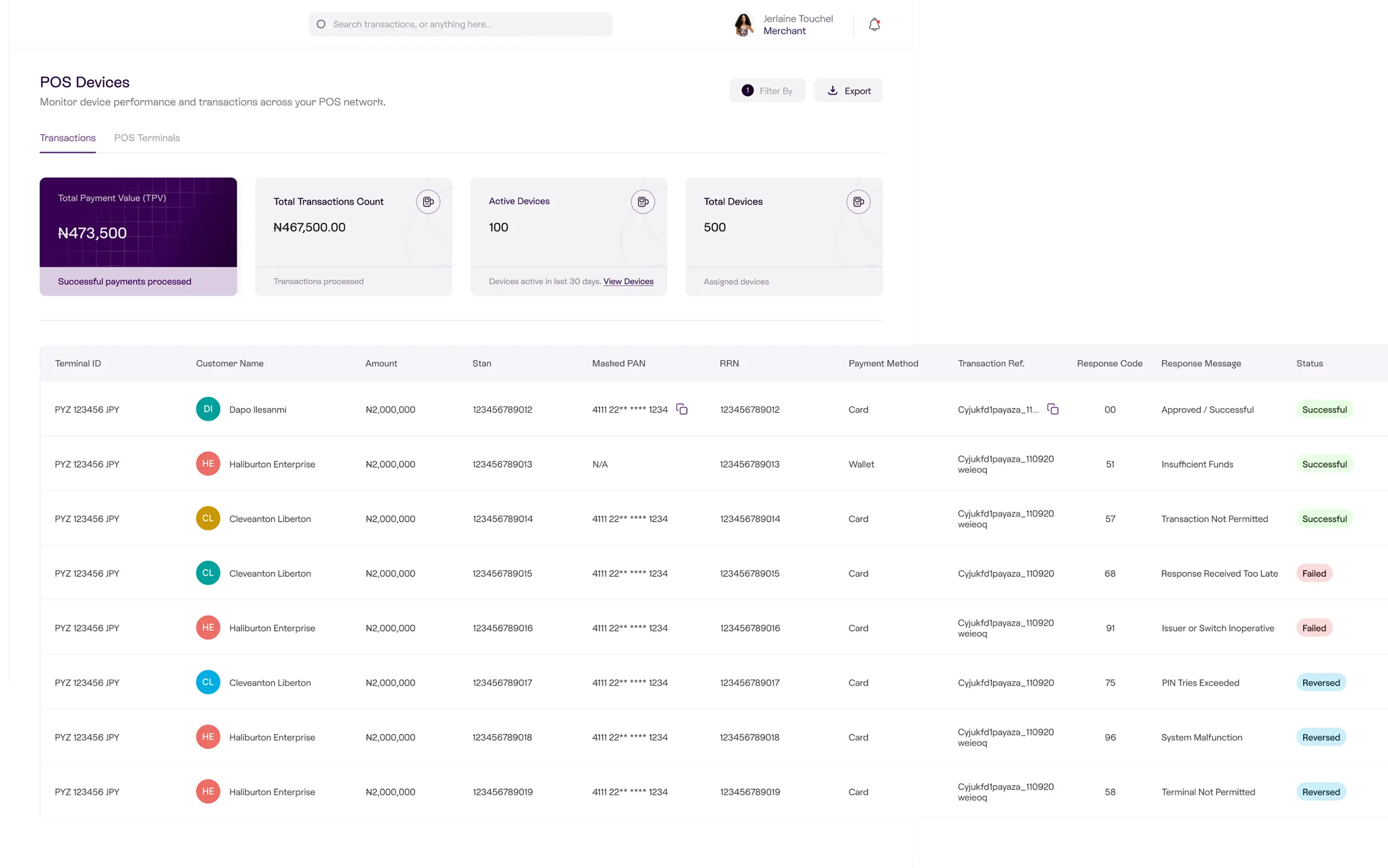
The merchant surface is a bulk configuration flow. Quantity first, then two carrying decisions: whether each terminal gets its own financial rail or shares one, and whether each terminal gets its own identity or joins a group. These are reconciliation decisions dressed as configuration choices. Merchants making them at request time avoid discovering the consequences at settlement time. Merchants with multiple branches make these decisions per branch. The system doesn’t force a hierarchy, because the object model doesn’t have one.
A merchant can share identity across a branch while keeping financial rails per terminal, or the inverse, without the system treating it as a special case. The merchant sees the shape of the deployment before they submit, not just the count of devices.
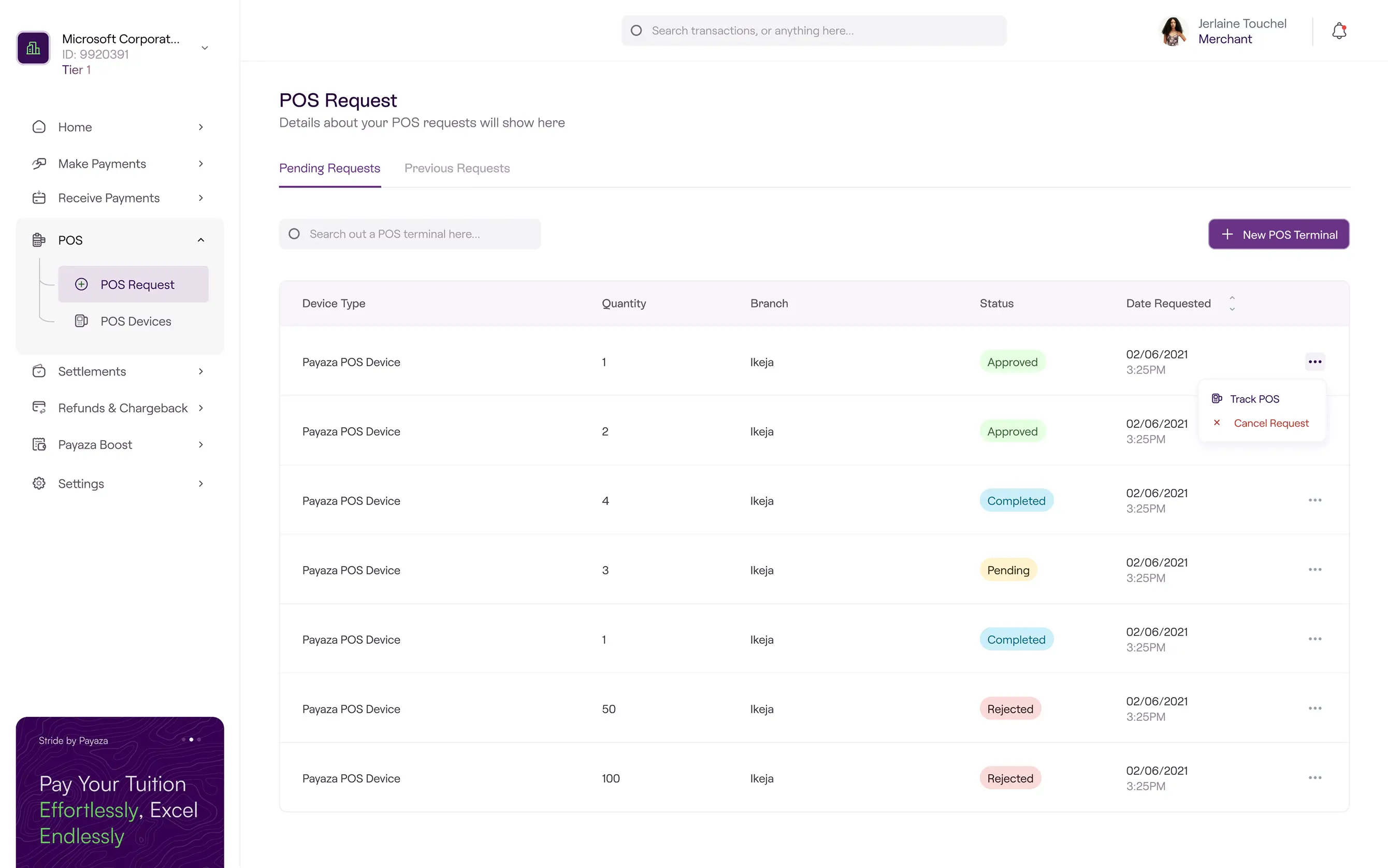
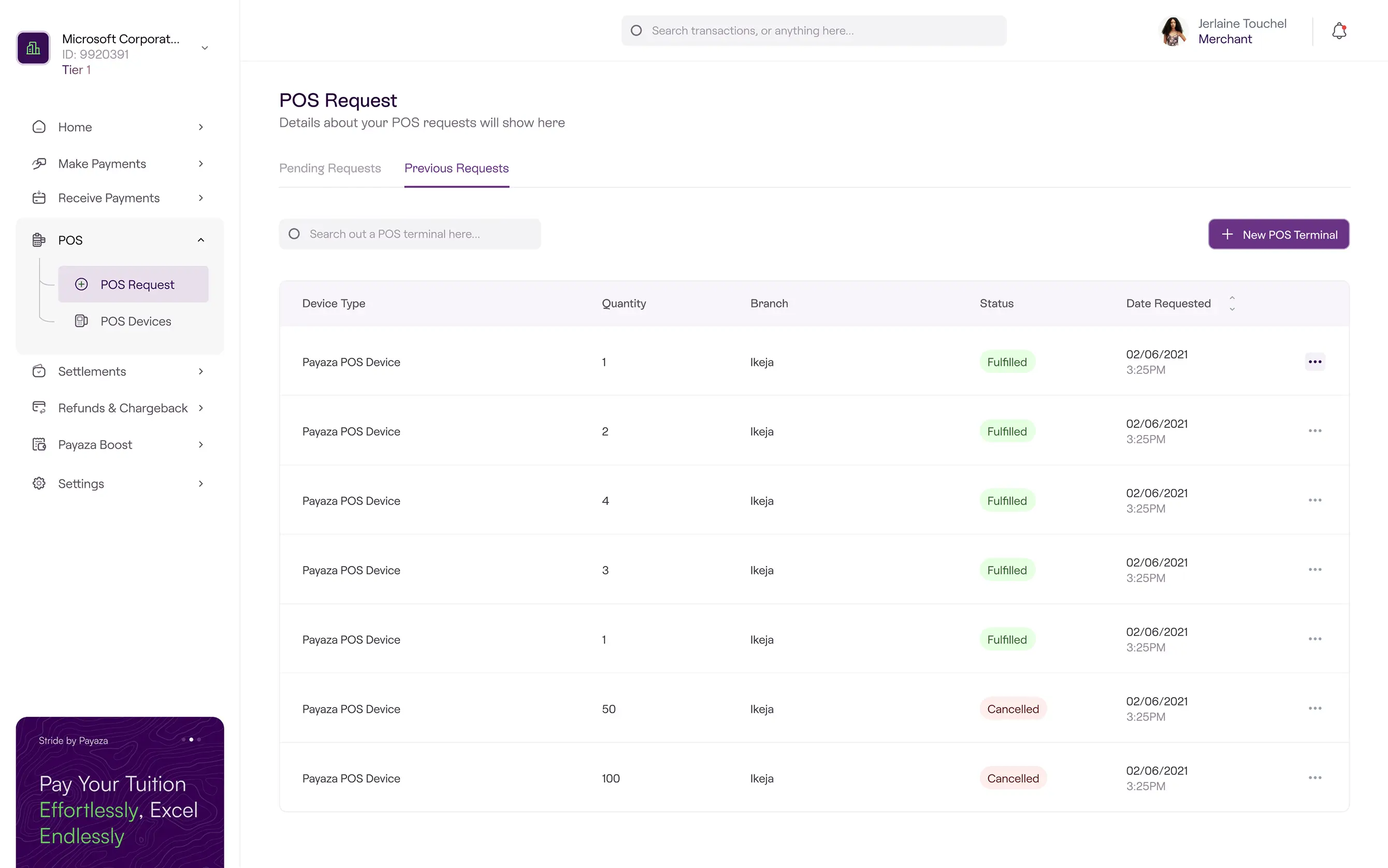
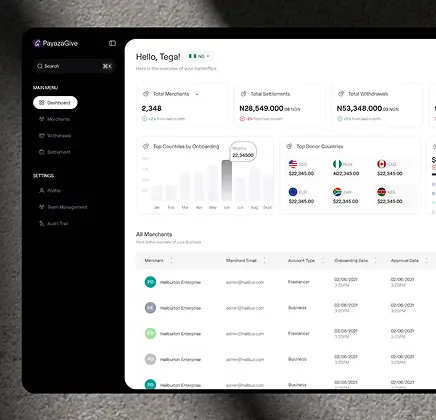
The admin surface is a command centre for the object pools and the bindings between them. Ops admins operate on states, not on individual terminals. The unit of work is “how many are ready to ship” rather than “where is device X.” Binding is a single decision surface. Lifecycle operations (replacing faulty hardware, decommissioning terminals, propagating merchant name changes to the display) sit alongside binding as peer actions, not as buried settings.
The audit trail isn’t a downstream report. It’s the surface the ops team uses to trace bindings when something drifts.
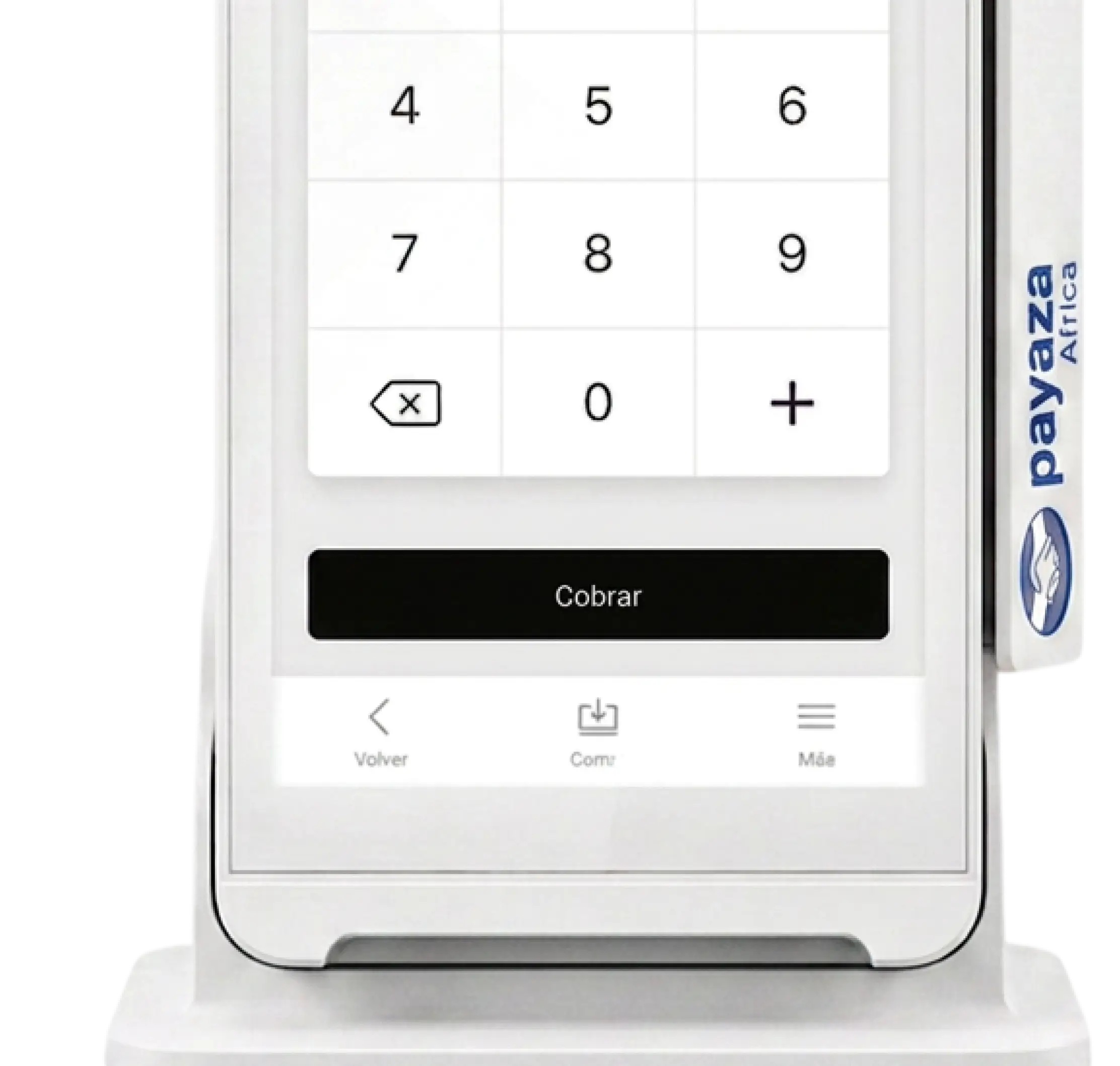

Take payments in person?
A Payaza terminal turns any counter into a checkout. Card, transfer, or QR, settled to your Payaza account the next business day.
The signal that the object model was right is that it absorbed changes without breaking. A new hardware supplier slotted in without changing the surface. A second vendor became a routing decision, not a rewrite. Branches, already a first-class object from an earlier product, were inherited rather than duplicated.
The merchant surface held because the carrying decisions moved reconciliation upstream. Merchants stopped discovering at settlement what they should have chosen at request. The admin surface held because the pool-and-binding model reframed the work. Chasing terminals through spreadsheets is linear. Operating on states scales.
A POS terminal is not one object. It’s a coordinated triple, held in agreement across a warehouse, a vendor system, and a payment rail. The product’s job is to keep the three in agreement, at scale, without asking anyone to hold the coordination in their heads. Everything else falls out of getting that right.